![logolimanobkg-1.png]](https://help.easyllama.com/hs-fs/hubfs/logolimanobkg-1.png?height=40&name=logolimanobkg-1.png)
💡This article teaches how to run a single campaign. To set up an ongoing, auto-managed program with multiple, rotating campaigns, see Phishing Simulator: Creating an Auto-Managed Program
Before You Start
What You'll Need
- A Core or Ultimate subscription or a Security Awareness Tool plan
- Must complete the initial setup of the Phishing Simulator
- Have at least one Point of Contact configured for learner follow-up
- Access to Phishing Simulator > Campaigns tab
Quick Reference
- Single campaign: One-time simulation for targeted learners
- Auto-managed program: For ongoing, rotating campaigns (separate guide)
- Core settings: Date range, assigned learners, email template, training assignment
- Publish required: Campaigns must be published to launch
Create and Launch a Single Campaign
NOTE: Before proceeding, be sure that you’ve completed the Phishing Simulator’s initial setup.
Step 1: Access Campaigns
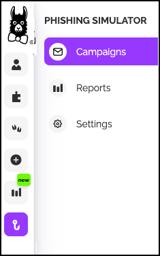
Go to Phishing Simulator > Campaigns tab.
Step 2: Select a Campaign Template
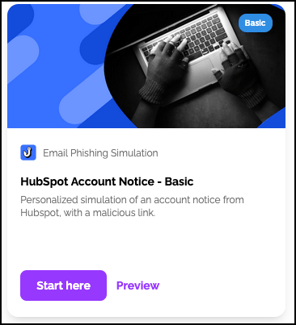
Under the Security Awareness program Next Steps section, you'll see available campaign templates. For each:
- Click Start Here to activate and configure that campaign
- Or click Preview to see the email learners will receive before activating
Step 3: Configure Campaign Settings
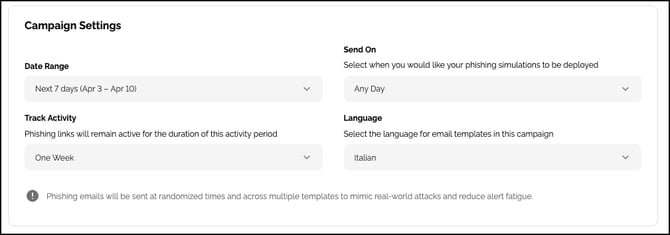
Date Range
- Set the start and end dates for when the campaign will run
- The campaign will only be active during this period
Send On
- Select specific date and time for phishing emails to be deployed
- Choose timing strategically (e.g., Tuesday mornings often have higher open rates)
Track Activity
- Phishing links remain active for the duration of this activity period
- Learners who click during this window are tracked as "failed"
Select a Language
- Select a Language to create a multilingual phishing campaign
- For more information, see How to Translate Phishing Simulations into a Learner’s Preferred Language
Step 4: Assign Learners
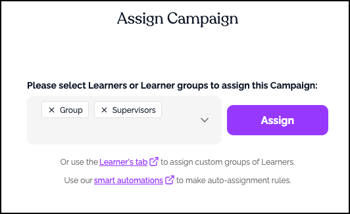
- From the Assigned Learners section, click the Assign button

- Select individual learners or groups (by department, location, role)
- Click Assign to confirm the selections
Step 5: Review Email and Training

Email Template
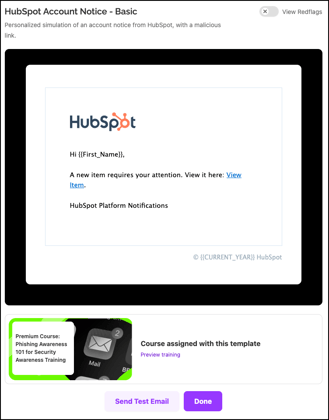
- Click Preview Template to see the exact email learners will receive
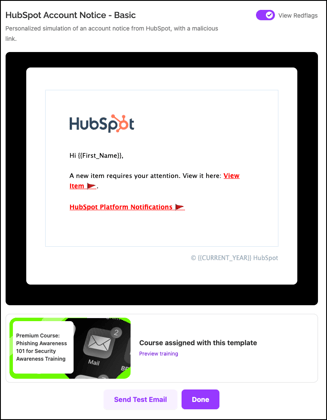
- Use the View Redflags slider to show what will trigger training
- Verify the phishing scenario looks realistic and matches your campaign goals
Training for Those Who Fail
- Click Preview Training to view the cybersecurity course assigned to learners who click the phishing link
- On the training page, click Share Preview to email yourself a free demo
Step 6: Preview Landing Page

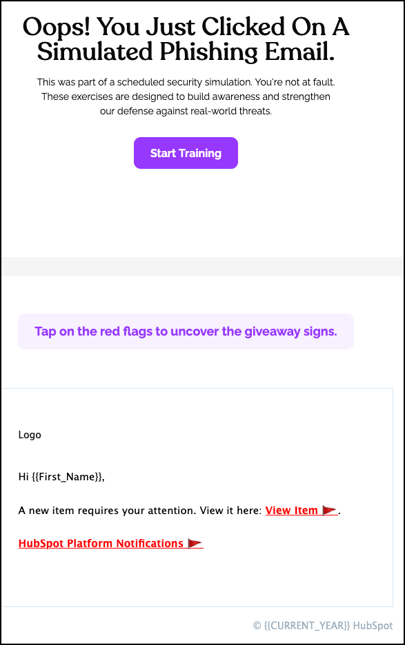
Click Preview landing page to see what learners experience if they click the link:
- Educational content explaining they clicked a simulated phishing email
- Security best practices and tips
- Link to assigned training course
Step 7: Verify Point of Contact

- The configured Point of Contact appears on the landing page for learner follow-up
- If none is set, click Edit in Settings to add one before publishing
Step 8: Edit Campaign Details (Optional)
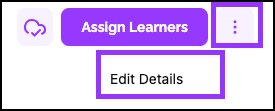
From the upper right corner, click the ellipsis menu (⋮) to customize:
- Campaign name (make it easy to identify later)
- Thumbnail image (for visual identification in campaign lists)
Step 9: Publish
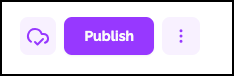
When all settings are configured, click the purple Publish button at the top left of the page. The campaign will launch according to your configured date/time.
Post-Launch Management
Monitoring Campaign Progress
- Track open rates, click rates, and failure rates in real-time
- View which learners have completed assigned training
- Export campaign results for reporting
Handling Learners Who Fail the Simulation
- Failed learners are automatically assigned the cybersecurity course
- They receive training notifications based on your settings
- Completion is tracked in their learner profile
Ending a Campaign
Campaigns automatically end on the configured end date. You can also:
- Manually end early via campaign settings
- Archive completed campaigns to keep the dashboard organized
Helpful Tips
Preview the phishing email before sending
Always preview the phishing email to ensure it appears realistic and aligns with your intended scenario.
Ensure a Point of Contact is set up
Without a Point of Contact, learners have no internal resource to turn to for questions after failing a simulation.
Assign learners prior to publishing
Double-check that learners are assigned before publishing, or the campaign will run with no recipients.
Consider the learner’s time zones
Consider your learners' time zones when setting "Send on" times to ensure realistic delivery.
Quick Questions
Can I edit a campaign after publishing?
Yes, you can edit campaigns that have not yet started or have not been completed. Some settings may be locked once the campaign is active.
What happens to learners who don't click the phishing link?
Learners who never click the phishing link are not assigned training. They remain in the "safe" category for that campaign.
How are learners assigned training?
Learners who click the phishing link are automatically assigned the cybersecurity course. No manual action needed.
Can I run multiple campaigns simultaneously?
Yes. You can have multiple active campaigns running concurrently, targeting different groups or using different templates.
Llama Fact: Llamas are naturally vigilant and quick to alert their herd to potential threats—similar to how phishing simulations help your team stay alert to real security threats!